


 Pick a Date


Every year around August, Sydney families start refreshing their inboxes, waiting for one particular envelope from school. NAPLAN results season is here, and for parents of kids in Years 3, 5, 7 and 9, that means trying to figure out when the report will land, what the scores actually mean, and how this year's cohort compares to the ones before it. Here's a complete rundown.
When Will NAPLAN 2026 Results be Released?
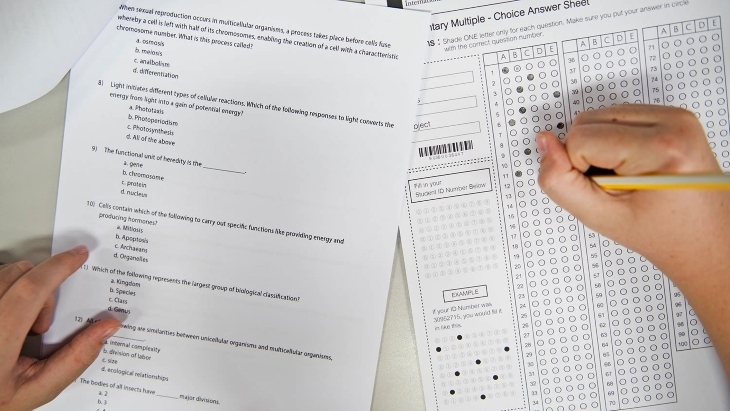
NAPLAN was sat by students across Australia in March 2026, but the results take months to reach families because of the marking, scaling and moderation process behind the scenes. There are two separate releases parents should know about.
Individual Student Reports (ISRs): Your child's personal report comes home through their school, not directly from the testing body. Schools began receiving individual results from the start of Term 3, with most NSW families expected to see their child's report land sometime in July or August.
Because distribution is managed school by school, timing can vary quite a bit even between two schools in the same suburb. If your child's classmate already has their report and yours hasn't arrived, that's normal rather than a sign something has gone wrong.
National Results: Separately, the Australian Curriculum, Assessment and Reporting Authority (ACARA) publishes the aggregated national data, showing how the country, each state and each year group performed overall. This year's national results are expected in early August 2026, following the same pattern as previous years (the 2025 national results were released on 30 July).
One thing worth flagging for this year specifically: a technical disruption affected the NAPLAN online platform on the first day of testing in March. ACARA has confirmed the majority of students completed their assessments as planned, but has added a caveat to the writing results for Years 5, 7 and 9 on individual reports, noting they should be read with that disruption in mind.
What Exactly is NAPLAN?
NAPLAN stands for the National Assessment Program – Literacy and Numeracy. It's sat annually by students in Years 3, 5, 7 and 9 across every state and territory, testing four domains: reading, writing, conventions of language (spelling, grammar and punctuation) and numeracy. Tests are completed mostly online, using an adaptive format that adjusts question difficulty based on how a student is tracking.
A few things NAPLAN is not: it's not a pass or fail exam, it's not used for school selection, and a single year's result isn't meant to define a child's overall ability.
ACARA describes it as a point-in-time snapshot, designed to give teachers, schools and parents a consistent, national way of tracking literacy and numeracy development over time.
Since 2023, NAPLAN moved from its old May testing window to March, which is why results now land earlier in the year than families may remember from a few years back.
How to Read Your Child's Proficiency Levels

Since 2023, results have been reported using four proficiency levels rather than the old band system:
Exceeding: the result exceeds expectations for that point in schooling
Strong: the result meets challenging but reasonable expectations
Developing: the student is working towards expected outcomes
Needs additional support: the student is not yet achieving expected learning outcomes and is likely to need extra help to progress
Each ISR will also show how a child's result compares to the national distribution, and for students who have sat NAPLAN before, how their own results have progressed since their last test.
What Have Previous Years' Results Shown?
Looking back at recent NAPLAN results gives useful context for interpreting this year's results once they land.
2025 results were broadly stable at a national level. Around two in three students achieved "Strong" or "Exceeding" across reading, writing and numeracy, while roughly one in 10 students nationally were assessed as needing additional support. Participation rates rebounded strongly, reaching 93.8% nationally, the highest level since 2017, with Year 9 also climbing back above 90% participation for the first time in years.
There were some encouraging shifts too. Average numeracy scores ticked up across Years 5, 7 and 9, particularly among already high-performing students, and there was a measurable increase in Indigenous students reaching "Exceeding" in writing and numeracy in Years 7 and 9 compared with 2023.
At the same time, the gaps that have shown up in NAPLAN data for years remained largely unchanged. Students from low socioeconomic backgrounds, those in regional and remote areas, and Indigenous students overall continued to trail their peers, and the size of those gaps was similar to what was recorded in 2023 and 2024. Girls tend to outperform boys in reading and writing, while boys tend to edge ahead in numeracy, a pattern that has held fairly consistently across recent years.
For NSW specifically, 2025 results were reported as stable compared with previous years, with some cohort growth showing through, including gains in Year 5 reading compared to the same students' Year 3 results back in 2023. In 2024, NSW students ranked first or equal first nationally across most subjects and year levels, though the state ranked third in reading for both Year 3 and Year 5, a gap the NSW Government flagged as an area for continued focus.
What To Do Once Your Child's Report Arrives
However the numbers land, a NAPLAN report is one data point rather than a verdict. A few things worth keeping in mind:
Look at growth, not just the raw result. If your child has sat NAPLAN before, the report should show how they've progressed since their last test, which tends to be more useful than the single snapshot.
Talk to the classroom teacher. They'll have day-to-day context that a report alone can't capture, and can help translate a proficiency level into a practical next step.
Keep it low-key with your child. NAPLAN results can knock a kid's confidence if they're presented as a big deal. Framing it as useful feedback rather than a test they passed or failed tends to go a lot further.
If your report hasn't turned up by mid-August, the first step is contacting your child's school directly. ACARA doesn't hold or send individual reports; every ISR is distributed through the school.
Frequently Asked Questions
Can I get my child's NAPLAN results early?
No. Reports are released once marking and moderation are finalised, on the school's own distribution schedule, and can't be requested ahead of that.
Where can I see the national and school-level results?
Once released, national, state and school-level data (not individual student results) is published on the My School website through ACARA.
Do all four domains get the same proficiency levels?
Yes. Reading, writing, conventions of language and numeracy are each reported separately using the same four-level scale, so a child might land in a different category for each domain.
Sources: ACARA (Australian Curriculum, Assessment and Reporting Authority); NSW Department of Education; Victorian Curriculum and Assessment Authority (VCAA); Queensland Curriculum and Assessment Authority (QCAA); nap.edu.au.
—
About ellaslist
ellaslist is a trusted local guide for families across Sydney and NSW. Our team of parents and family lifestyle editors researches and reports on the school, parenting and family issues that affect everyday life, from NAPLAN and school holiday planning to health, education and the local events and activities that make family life easier. We aim to give parents clear, practical information they can act on, whether that's understanding a school report, finding the right family activity, or knowing what's coming up on the local calendar.
More Parenting Reads
Survive & Thrive in The HSC: Blacktown City Council's Free Support
NSW's Top Primary Schools 2026: Public & Private Rankings Revealed
Active & Creative Kids Vouchers: How to Apply in 2026
Have you signed up for our newsletter? Join ellaslist to get the best family and kid-friendly events, venues, classes and things to do NEAR YOU!
Reviews